How to Use AR for Restaurants to Boost Promotion & Conversion
Using AR for restaurants helps better present details of restaurants and dishes, increasing conversion rates and sales. Add AR to your restaurant promotion with this guide.
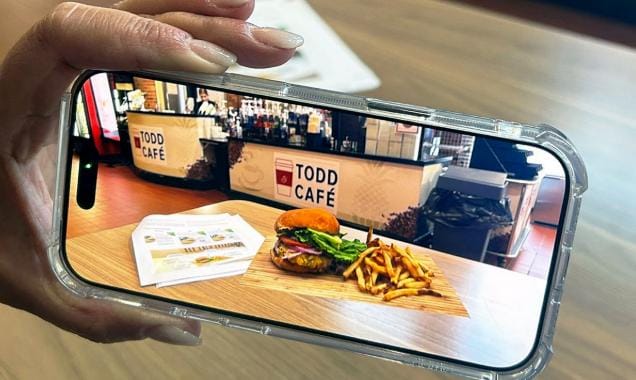
Imagine being able to show customers a realistic 3D version of a dish before they place an order or let them interact with digital content while dining. These immersive experiences are just a few examples of how restaurants use AR to engage customers. Many restaurants are using AR to enhance the dining experience and increase sales. According to a ScienceDirect study, AR can significantly enhance customers' positive evaluations of the restaurant experience and help restaurants build stronger customer relationships.
Hoping to apply AR for restaurants but have no clue where to start? Follow this post to get some use cases, successful industry examples, and a WebAR solution.
What is AR for Restaurants?
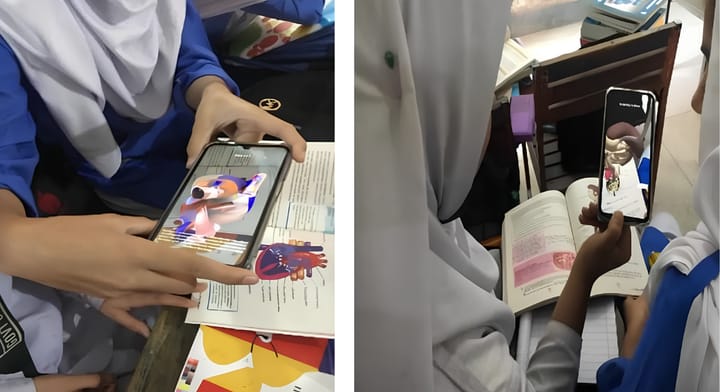
Augmented reality for restaurants is a technology that overlays interactive digital content onto the physical dining environment, helping restaurants enhance customer experiences, increase engagement, and drive sales. No matter if you’re in the food and beverage industry, this technology can benefit your business.
Benefits of AR for Restaurants
From 3D food visualization and AR-powered restaurant interior design to attractive filters inside social media platforms, restaurants are adopting AR because of its many business and customer experience benefits.
Enhance Customer Engagement: Instead of static images and restaurant environments, AR technology in restaurants offers a more interactive dining experience for customers.
Increase Food Appeal and Purchase Confidence: With realistic dish and raw material visualization, customers can better understand the food they tend to order. According to a study from Springer Nature Link, AR-enhanced food presentation can significantly increase food desirability compared to traditional images.
Get Higher Customer Satisfaction and Positive Brand Perception: Unlike the traditional restaurant experience, the augmented reality in restaurants leaves a lasting impression with an immersive AR dining experience. Memorable AR experiences can strengthen brand recall and encourage repeat visits.
Improve Marketing Performance and Social Sharing: Engaging AR experiences encourage customers to create and share videos on social media, which can naturally promote the restaurants.
Level Up Conversion and Sales Potential: The dynamic 3D effect can better present the premium dishes and promotions, helping customers move more quickly from browsing to purchasing and finally improving sales.
Key Augmented Reality Restaurant Use Cases
Augmented reality is widely used in restaurants, bringing dishes and services to consumers in a more entertaining way. Here are some key use cases that adopt AR to drive restaurant sales.
1. 3D Food Visualization
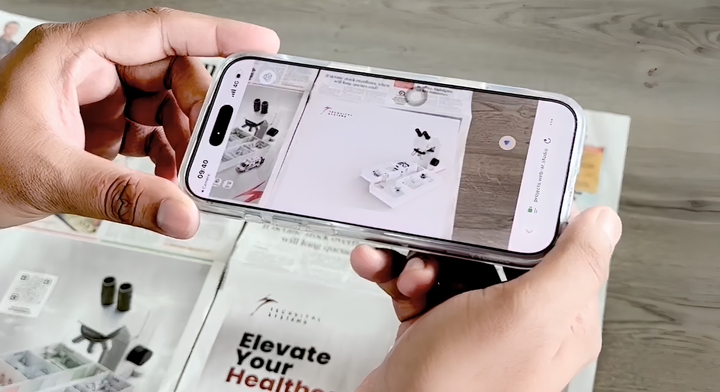
2D images often fail to fully showcase the true essence of dishes. With food augmented reality, guests can simply scan the given menu or poster to check the 3D effect, presentation, portion size, and ingredients of each dish.
In addition, the instant food visualization also enables a more personalized AR dining experience. With AR, diners can customize dishes according to their own dietary needs, taste preferences, and cultural beliefs.
2. AR Restaurant Marketing Campaigns
AR technology in restaurants can also be used for campaigns.
Festival-themed activities: During festivals, such as Christmas and Halloween, restaurants can create festival-themed interactive presentations and product visualizations. When the customers scan the special menu or the table, they can unlock the holiday-exclusive interactive digital content, such as holiday-themed decorations, animations, and even a funny virtual performance.
AR games: With immersive AR games such as treasure hunt challenges, restaurants can gamify the dining experience and turn it into a unique and engaging experience.
3. Interactive Brand Storytelling Experiences
Adding AR storytelling content to scannable items, such as menus, posters, napkins, and tablecloths, can not only make meal-waiting time much more pleasant, but also help consumers build a deeper connection with the brand. For example, talking about dish stories lets consumers better understand the unique flavors and ingredients. Also, sharing restaurant history helps to build up a sense of community and shared values with the consumers.
4. AR Packaging and Takeout Experiences
AR packaging is one of the most powerful tools to attract consumers. By combining AR with restaurant takeout packaging, restaurant brands can share product information and related videos with their consumers, showing their exclusive brand identity and core values.
5. Social Media AR Filters
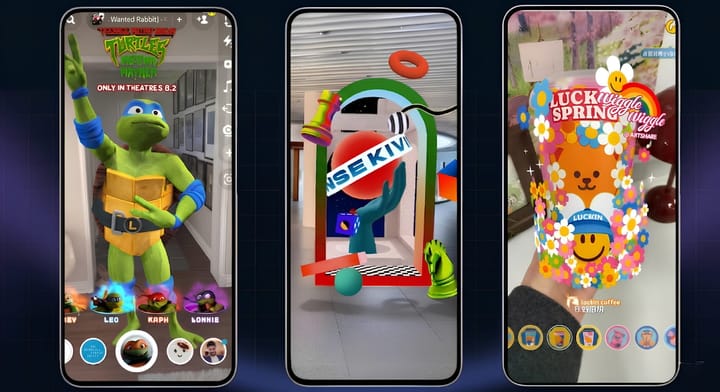
Using augmented reality filters is another practical method for restaurants to attract consumers and leave an unforgettable brand impression. With trendy filters, you can provide your users with interactive and immersive experiences beyond dining. Guests will voluntarily create content and share it on social media, largely improving restaurant visibility.
6. AR for Sustainable Dining
Food allergies and dietary restrictions are important considerations when dining out. AR technology for restaurants can be used to present allergens in each dish, making dining much safer for those with allergies. Besides, other detailed information is also accessible with this technology, such as calorie, macronutrient breakdown, and more.
4 Successful Examples about AR for Restaurants
Here are 4 popular examples that present the power of AR for restaurants.
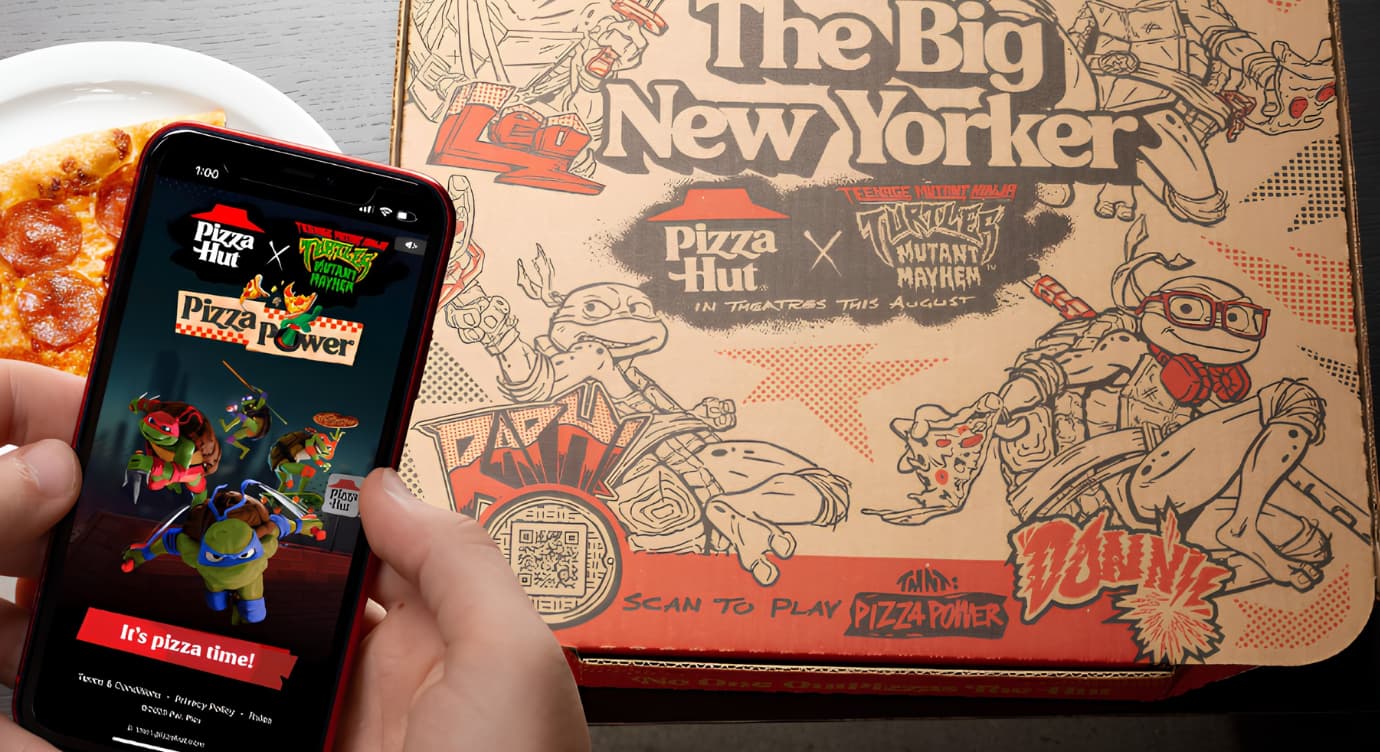
- Pizza Hut × Teenage Mutant Ninja Turtles AR Campaign
Pizza Hut has partnered with Teenage Mutant Ninja Turtles to let consumers seek virtual manholes and deliver pizza to the Turtles. With the location-based AR and incorporating image trackers on pizza boxes, it enables anyone to get into the game simply by scanning the QR code. This campaign achieved tremendous success with hundreds of thousands of gameplays and significant media coverage.
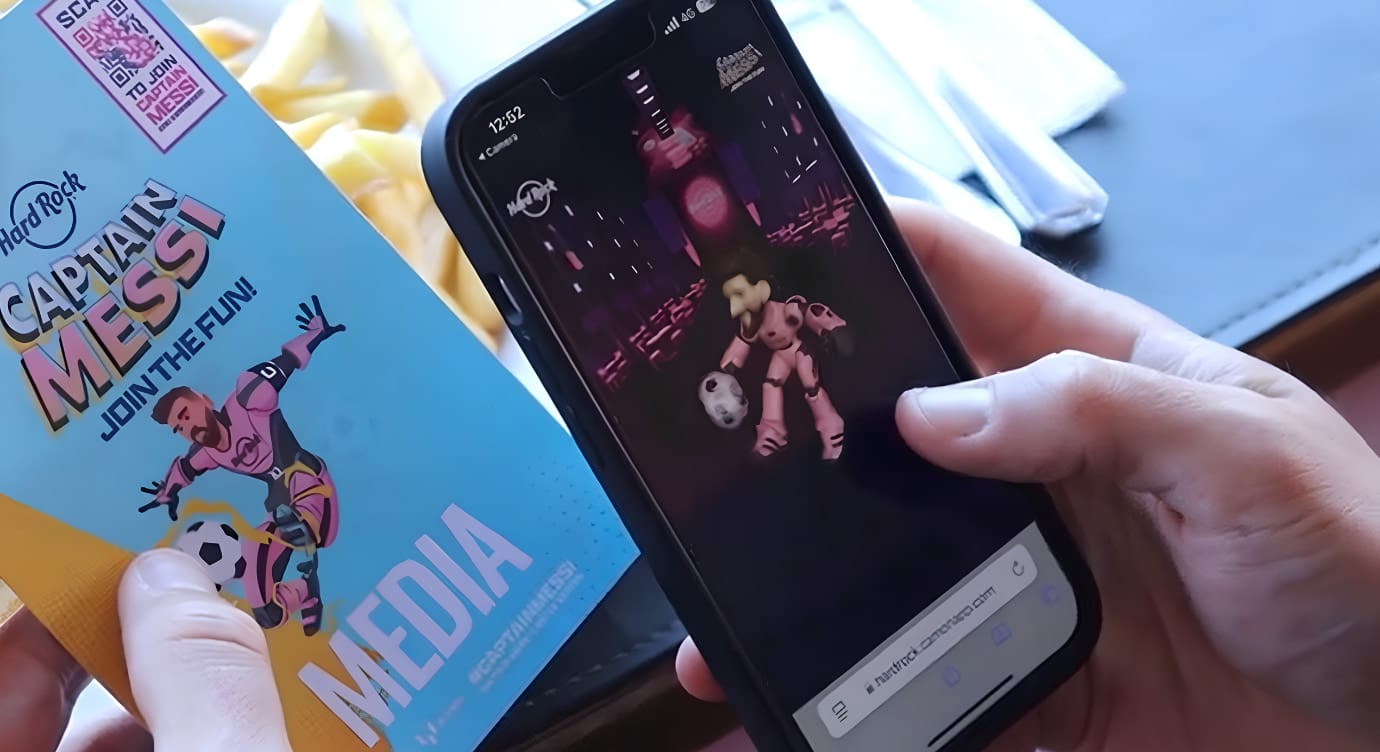
- Hard Rock Cafe × Lionel Messi AR Experience
For greater impact, Hard Rock Cafe cooperated with Lionel Messi for an interactive AR experience. Using the augmented reality technology, consumers can place virtual Messi figures and collectibles into their real-world surroundings. This engaging AR restaurant experience deepened the connection between the restaurant brand and its consumers through interactive exploration.
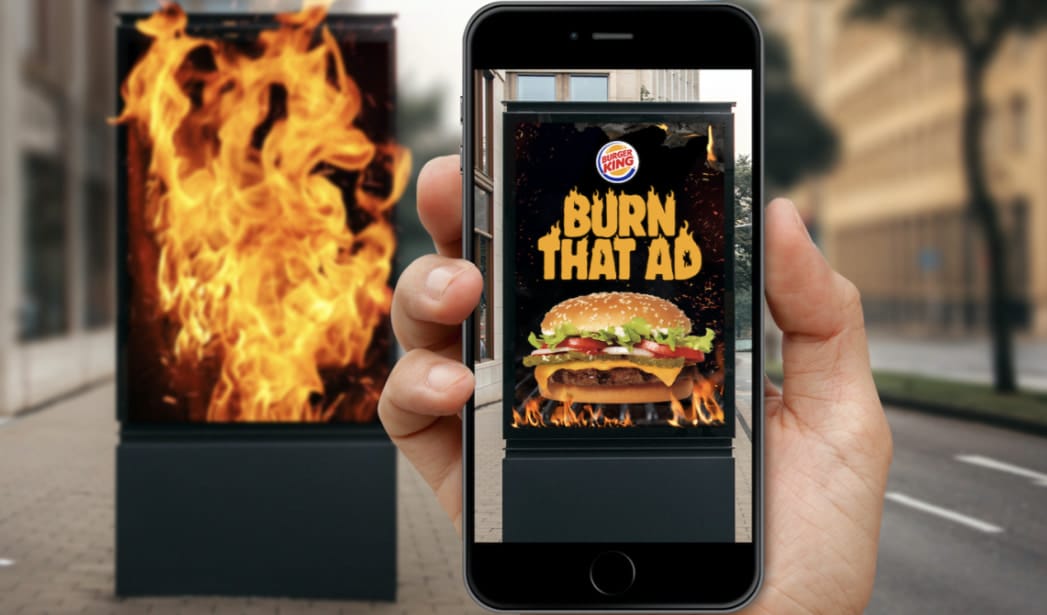
- Burger King Burn That Ad AR Campaign
The Burn That Ad is a wonderful sample of combining augmented reality technology with restaurant brand marketing. Users simply open the Burger King Express AR app and point their phones at competitor advertisements. The AR experience then virtually sets those ads on fire until a Burger King Whopper coupon appears. The campaign continued for 3 months, and during the period, the sales increased by 55% in Brazil and achieved about 1 billion media impressions.
If you want more AR marketing ideas, this post can be helpful:
 Leonie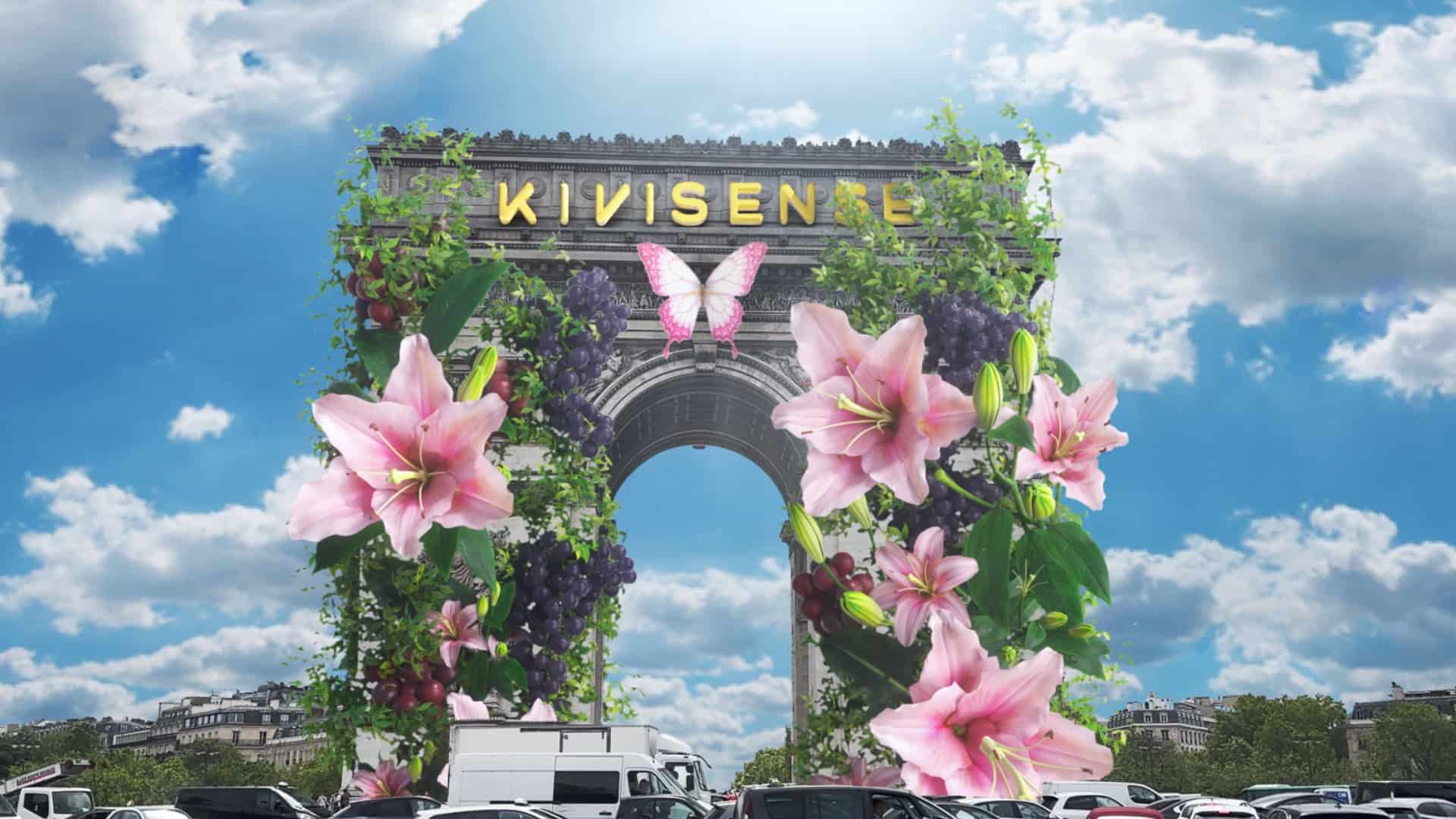
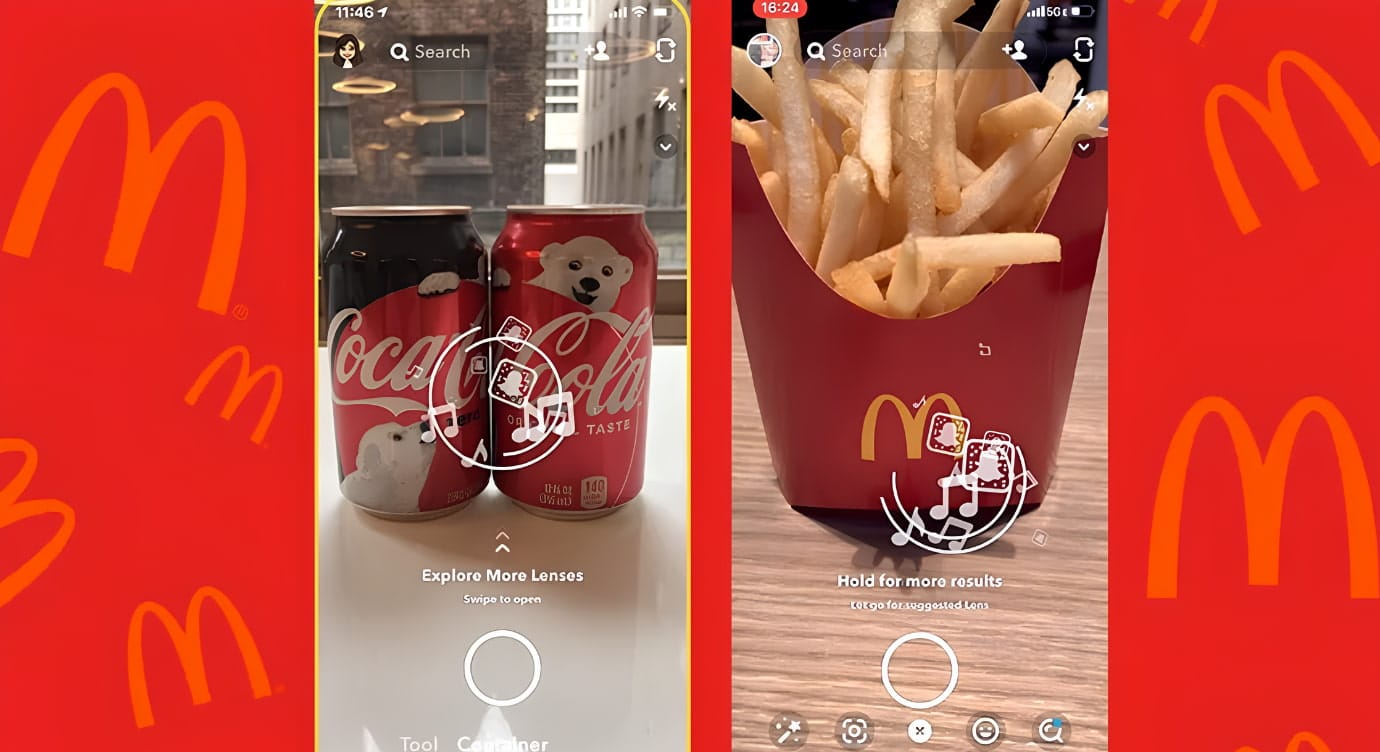
- McDonald & Coca-Cola Snapchat AR Lens
McDonald's and Coca-Cola were among the first food and beverage brands to experiment with Snapchat's Scan advertising format. Users can scan the brand logo to start a brand-exclusive AR filter experience.
A Practical WebAR Solution to Increase Restaurant Sales
Adding AR to restaurants no longer requires high development costs, app downloading, and complicated codes. With a WebAR platform such as Kivicube, you can easily create restaurant augmented reality scenes directly in the browser. Whether you want 3D food visualization, interactive restaurant interior design, or hilarious and eye-catching AR filters, Kivicube covers it all with simple drag-and-drop editing.
Kivicube Video Introduction
Two Free AR Creation Projects
Each new account has two free AR creation projects with unlimited views, so you can start AR restaurant campaigns without upfront development cost.
Exclusive Restaurant AR Templates
Multiple pre-designed AR templates related to restaurant marketing are available here. Just select one and replace the assets, and then you can make your own AR restaurant scene within minutes.
Realistic Food Representation
The high-definition rendering ensures that the dishes and other items can be displayed with accurate scale and details. It helps guests better understand portion sizes and menu items, which can improve purchase confidence.
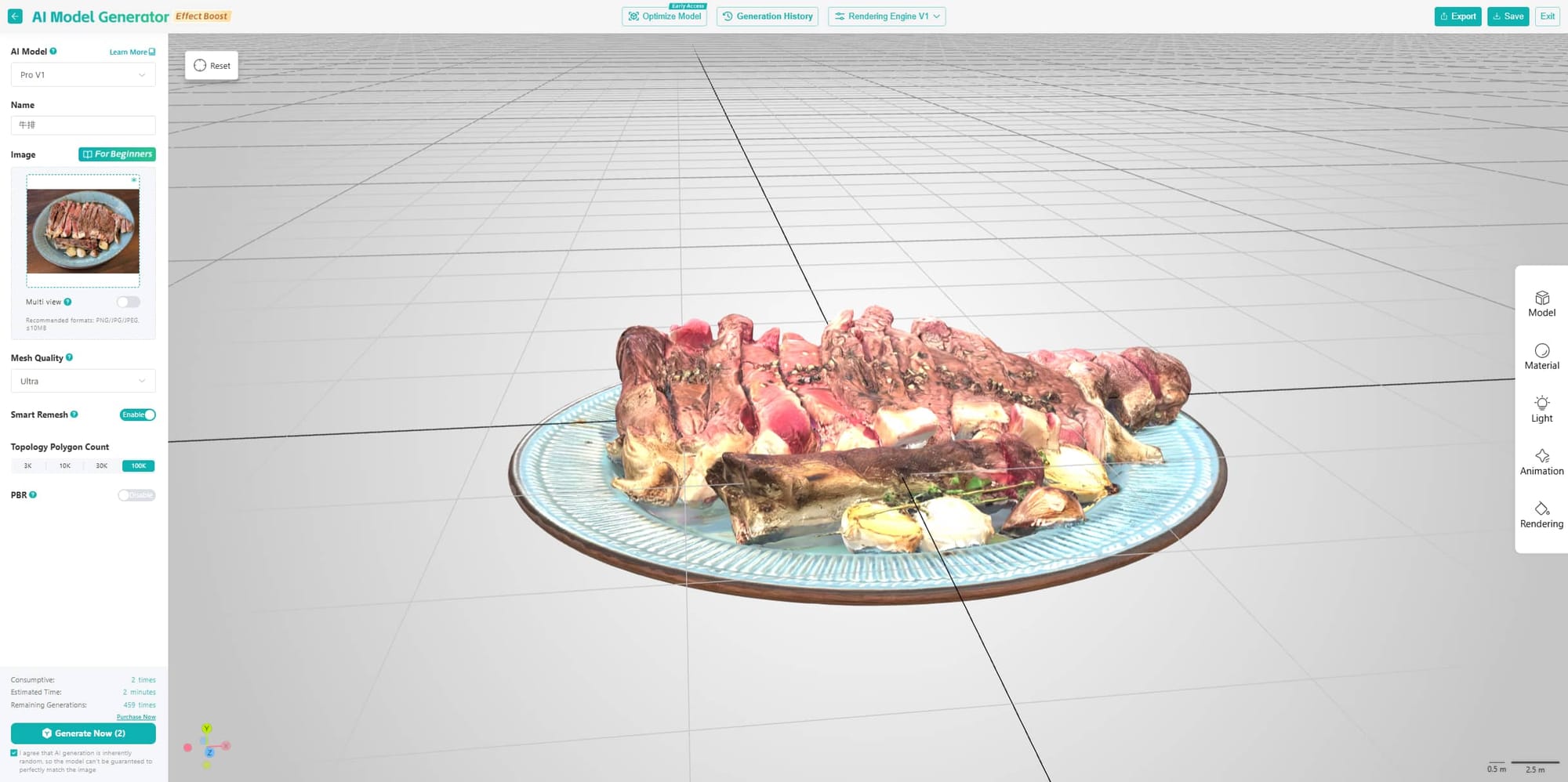
AI-Assisted Model Generation
The Kivi AI generator can generate 3D models from images and texts. The generated 3D models will be automatically saved to your own assets library for you to easily access, allowing you to rapidly create immersive AR experiences.
Easy Cross-Platform Sharing
The web-based AR tool enables you to share the QR code and link of the new AR restaurant scene across websites and social media platforms to widely promote the restaurant. You can also print QR codes on physical restaurant materials such as menus, posters, table tents, and packaging, allowing customers to instantly access and interact with your AR content.
Professional AR Restaurant Marketing Services
There’s an experienced team that has served industry-leading brands such as KFC and can work on projects from end to end, covering everything from creative design to the final project that meets your specific requirements.
Restaurant Augmented Reality Showcases Created by Kivicube
Let’s explore the example of augmented reality restaurant scenes created by Kivicube.
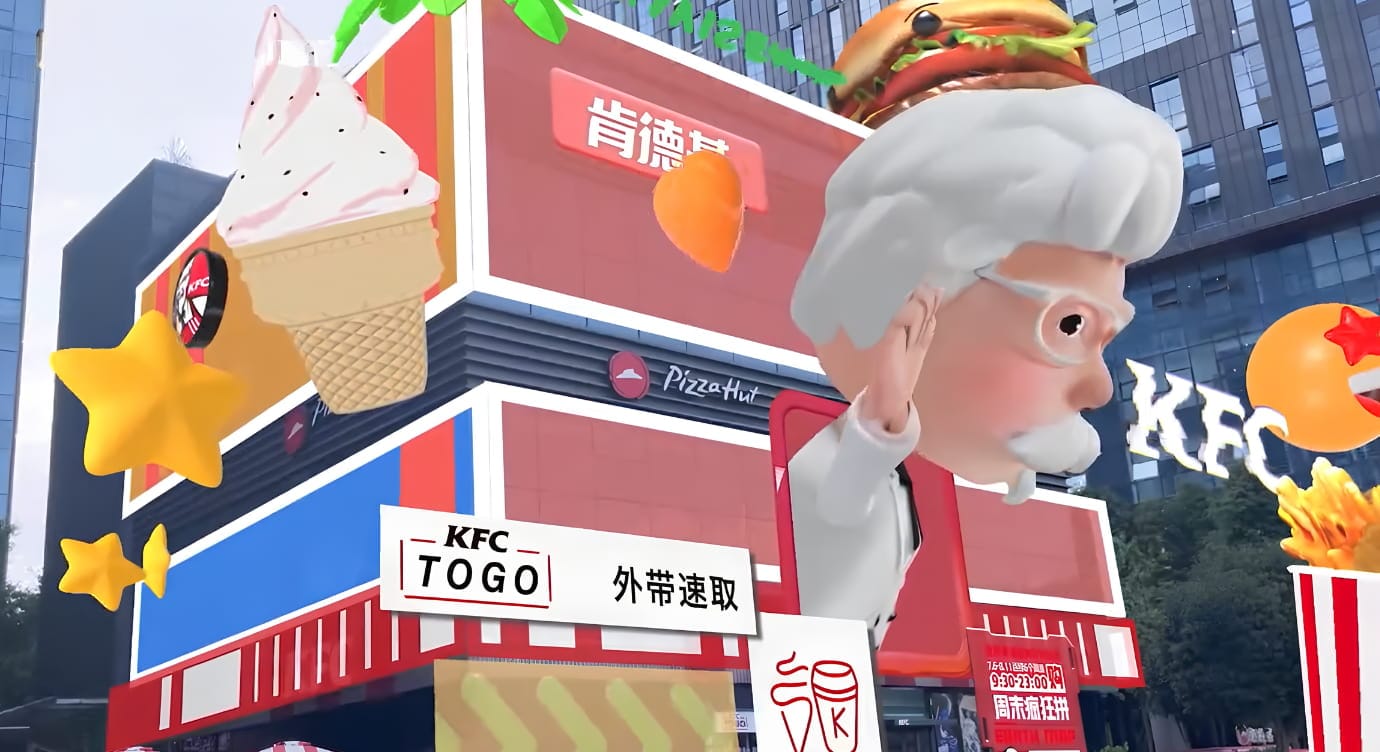
- AR Decoration for KFC Restaurants
Kivicube enhanced KFC restaurants with interactive AR content. Users simply scan a QR code to view interactive digital content overlaid onto the restaurant exterior. This interactive AR restaurant experience left a deep impression on the consumers and improved conversion during the campaign.
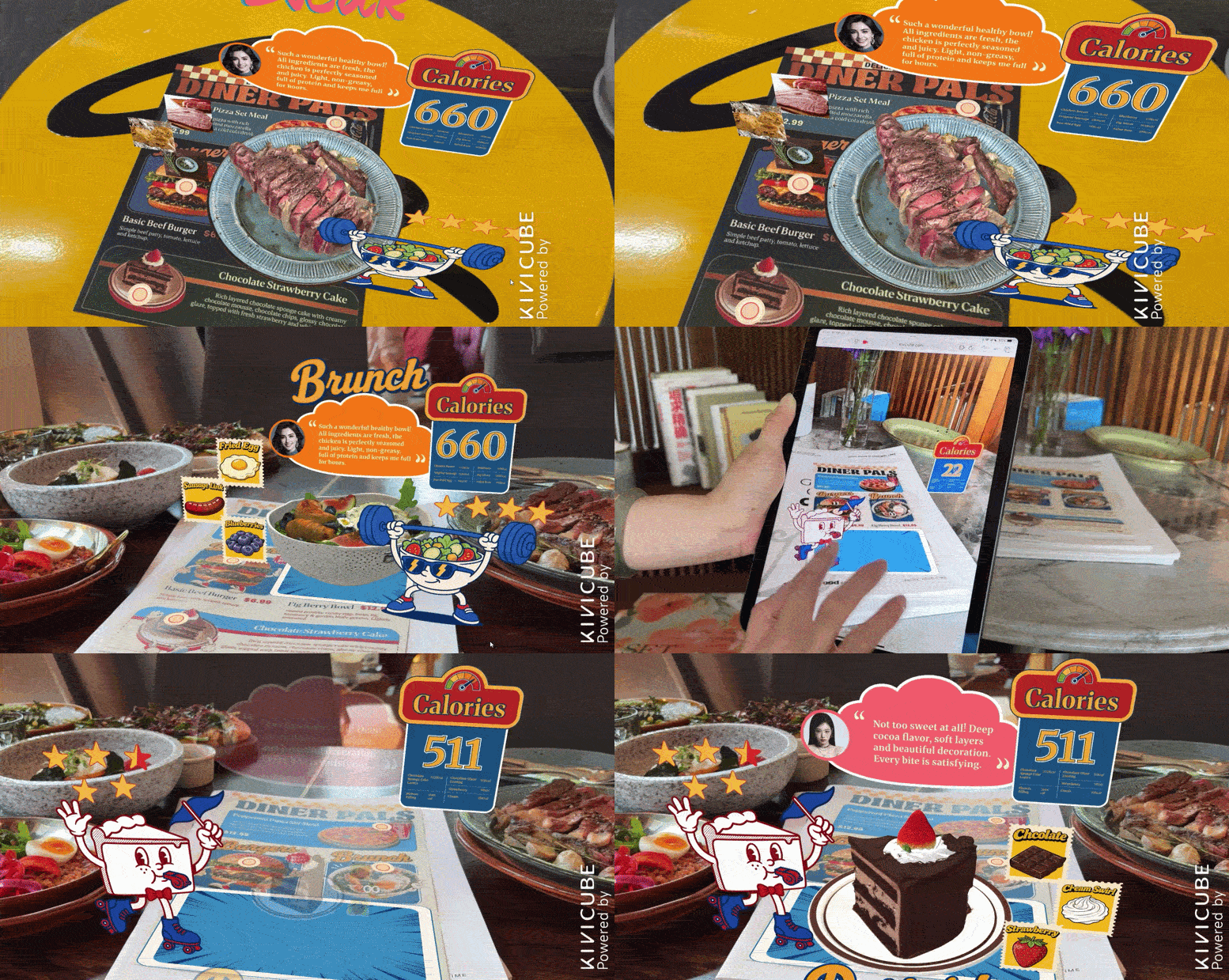
- Interactive Digital Menu
To make meals more attractive to customers, Kivicube created a 3D digital menu for intuitive dish visualization. With the advanced AR image tracking technology, users can scan the paper menu to unlock the realistic augmented reality food models before ordering.
Click here to see how to make an interactive menu for your restaurant:
Bella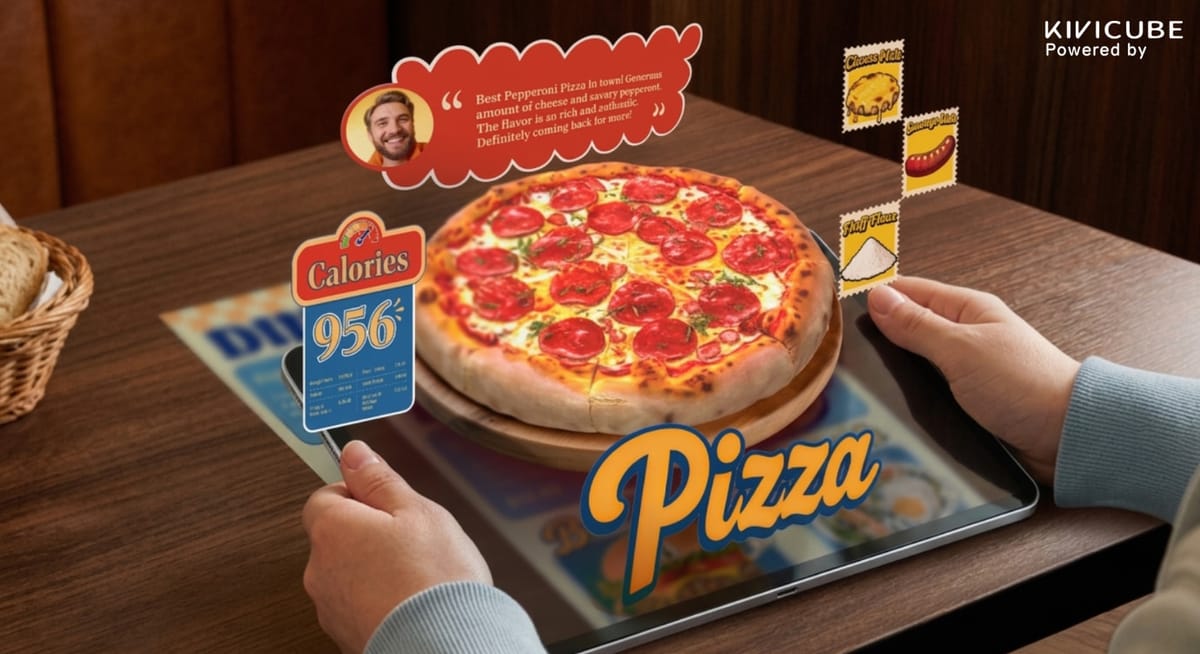
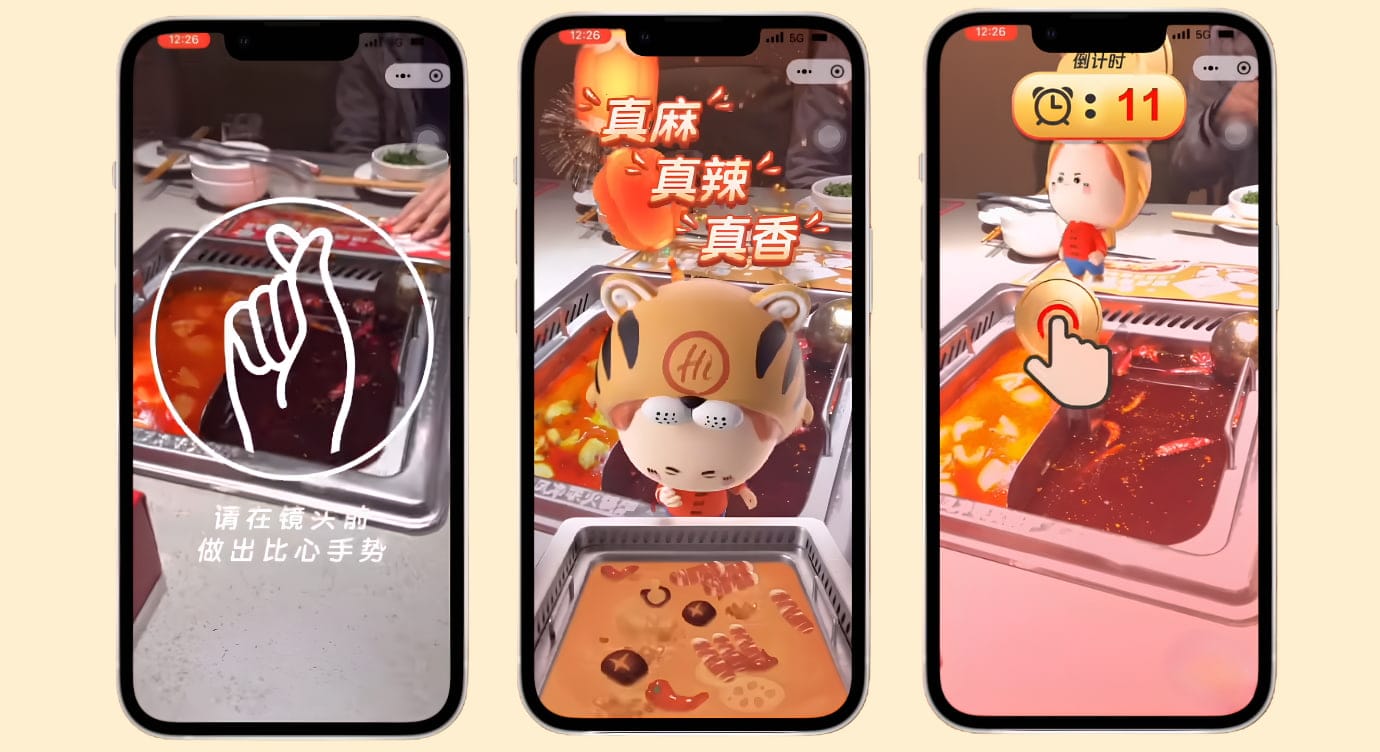
- Haidilao Hot Pot AR Game
Partnering with Haidilao hot pot, Kivicube created and launched an AR campaign for the Haidilao consumers. During the 2022 Lunar New Year, customers could access the experience by scanning the in-store "Zhen Xiang Guo" display. Making a heart-shaped hand gesture triggered a "raining gold coins" mini-game, where users pan their cameras around to collect the coins. Once the game is finished, users can receive a Haidilao New Year bonus red envelope.
FAQs about AR for Restaurants
Q: Do customers have to download an app to see the AR restaurant experience?
Not necessarily. The modern WebAR technology enables consumers to access AR experiences for restaurants with their mobile browsers. Just scan a QR code or click a link, and they can easily interact with the digital content in restaurants through their phone cameras.
Q: Does AR increase restaurant sales?
AR has a positive influence on purchasing decisions by making food and promotional content more engaging. Research published in the Journal of the Academy found that AR-enhanced food presentations can increase food desirability and encourage stronger purchase intentions compared to traditional product displays.
Q: Does it require coding skills or 3D design expertise to create?
No. With WebAR tools like Kivicube, you can create augmented reality restaurant scenes with simple drag-and-drop editing. Besides, built-in AI model generators such as Kivi AI help to generate 3D models from text prompts or images. Therefore, no need for any coding or 3D design expertise.
Q: Can small restaurants benefit from AR?
Yes. AR is no longer limited to working for large restaurant brands. With WebAR technology, small restaurants, cafés, bakeries, and beverage brands can create interactive experiences without investing in expensive app development.
Wrap Up
Using AR for restaurants helps optimize the dining experience, improve real-world ordering confidence, and boost sales. With a Web-based AR tool like Kivicube, making an eye-catching augmented reality restaurant experience is easy and fast. Stop focusing on static images and menus, and let’s improve restaurant promotion and sales with AR.